The Urban Geography of AI Washing AI 洗白的城市地理
The label travels globally. The future it promises is made locally—in clouds, airports, business schemes, air conditioners, funds, skin care, and massage chairs. 全球流动的是 AI 标签,地方化的是它所承诺的未来:云、机场、创业生意、空调、基金、护肤与按摩椅。




In July 2026, the letters AI kept meeting me before the technology did. They appeared above an airport service counter, across a city bus, beside skin-care bottles, and on a massage chair. In Beijing, a sentence could become an app and AI could be collapsed into Alibaba Cloud. At Incheon Airport, AI offered to help me find my way. In Chongqing, it promised business growth, instruction, hotel rooms, laundry services, and cleaner air. In Taiwan, it entered investment, skin, muscle, and fatigue. The same two letters moved easily. What they meant did not.
This is the familiar problem of AI washing: attaching AI to a product, service, or organization in a way that overstates, obscures, or leaves unverifiable what the technology actually does. Yet the photographs do not authorize a verdict that every claim is false. Some of these systems may use machine learning in consequential ways; others may add a minor automated feature; still others may use AI mainly as atmosphere. The point of the field note is not to audit proprietary code from a billboard. It is to ask what becomes publicly credible once the label is attached.
That question produces a geographical puzzle. AI models, cloud platforms, advertising formats, and corporate brands circulate globally. If globalization standardizes technologies and aspirations, why does AI not look the same everywhere? The answer is that circulation does not eliminate place. It gives places a common sign to translate. The label is global; the future it promises must be made locally plausible.
AI washing therefore has an urban geography because AI diffusion itself is uneven. Cities occupy different positions in technical supply chains; they assemble different firms, institutions, workforces, infrastructures, consumers, and regulatory expectations. They also carry different development ambitions and anxieties. A claim that sounds persuasive in a national innovation center may be too abstract for an airport passenger, too distant for a small business owner, or too impersonal for someone shopping for relief from acne or back pain. Marketing does not merely describe a technology. It translates AI into the problem a place is already prepared to recognize.
In Beijing, AI appears as capacity. The two airport advertisements make the technology feel upstream and systemic: cloud infrastructure, application generation, a platform on which other things can be built. This language fits Beijing's position as a national capital and major innovation center, where official plans speak of an “AI-native city,” foundation models, industrial ecosystems, and technological autonomy. Geopolitical competition forms part of this horizon, but the photographs do not simply depict nationalism. They show a more practical promise: scale. AI is presented as an infrastructure one can enter and a capability one can command.
At Incheon, AI appears as circulation. “May AI help you?” is not a claim about sovereign models. It is an interface placed between a traveler and a complex transport system. Here intelligence means orientation, multilingual assistance, prediction, automation, and reduced friction. Incheon is not Seoul, though it operates as the global gateway of the Seoul metropolitan region. Its airport has separately framed itself as an aviation AI hub. In this setting, AI becomes credible by making movement feel seamless and the airport feel responsive.
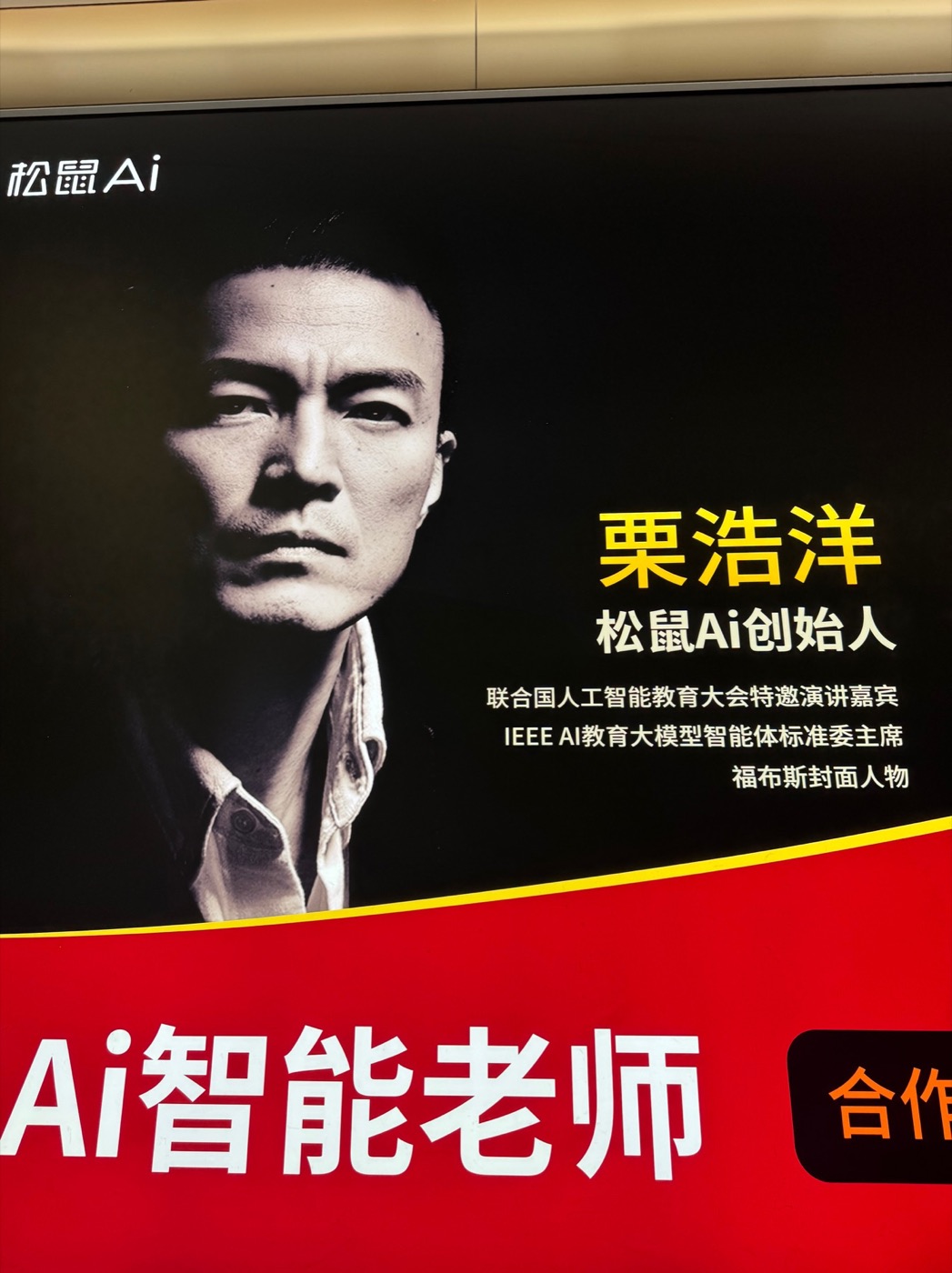
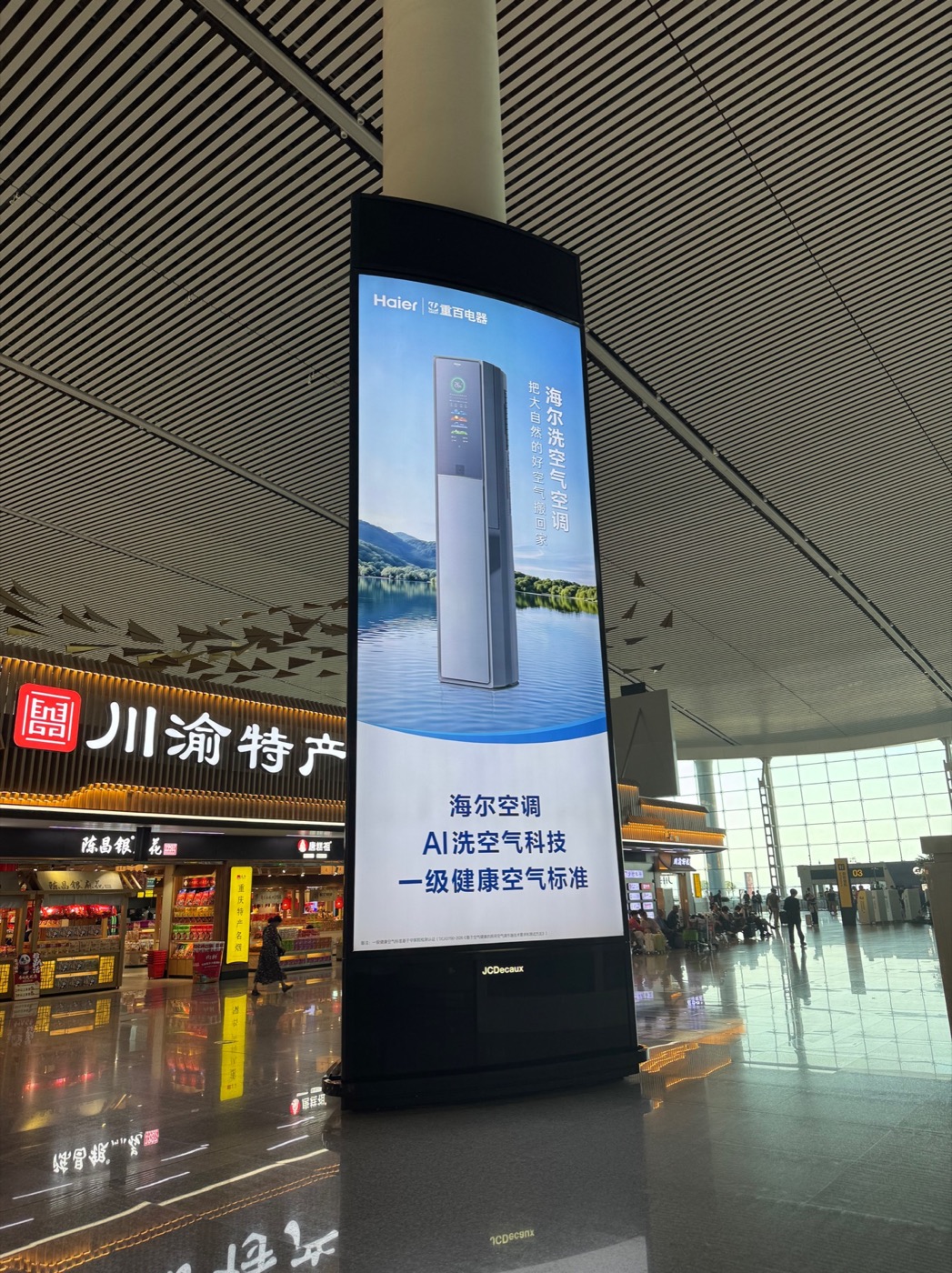
In Chongqing, AI appears as acceleration. The city should not be reduced to a “second-tier” position on a commercial ranking. The airport images instead show how AI is packaged through an inland megacity's dense worlds of manufacturing, franchising, training, hospitality, appliances, and consumer upgrading. One platform claims an ecosystem spanning marketing, digital liquor cabinets, education, cloud laundry, power banks, and hourly hotels. Another turns expertise into an “AI teacher.” An air conditioner promises “AI air-washing technology.” The appeal is not simply intelligence; it is the prospect of entering a new economy quickly, converting an old business into a new category, and making a familiar object newly investable.
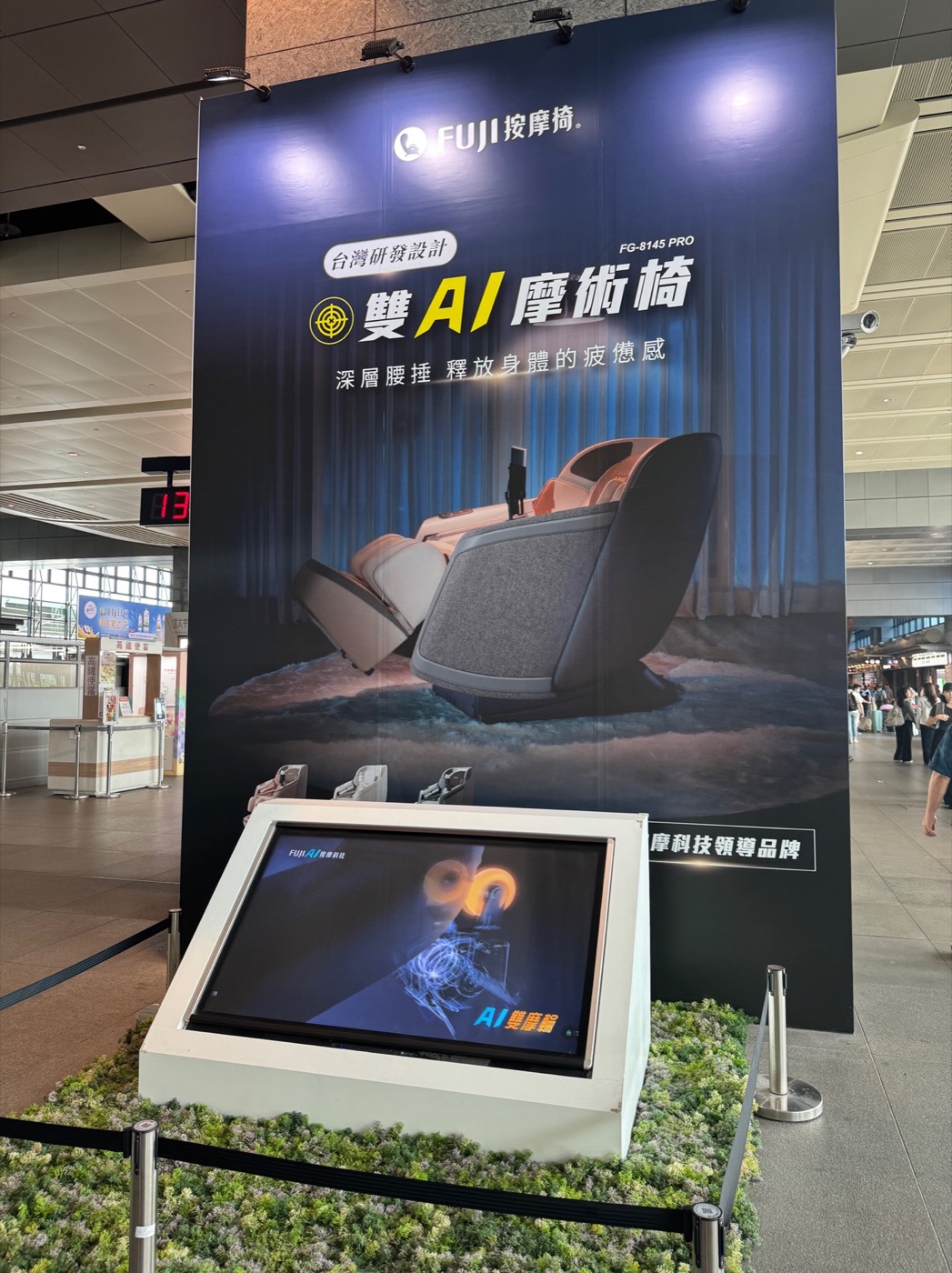
In Taipei and Taichung, AI appears as intimacy. A fund advertises the coming age of humanoid robots on the side of a bus. A skin-care brand promises “AI intelligent acne treatment.” A massage chair carries “dual AI” into the lower back. These scenes resonate with Taiwan's hardware and consumer-electronics base, but they also exceed it. AI is translated through a service and retail ecology into the management of wealth, skin, pain, and bodily comfort. The claim moves downstream until the future can be felt on the body.
These are not four city essences. Nine photographs, most taken in airports, stations, streets, and commercial interiors, cannot stand for entire urban societies. They are better understood as situated encounters in threshold spaces—places designed to address travelers, commuters, shoppers, and aspiring entrepreneurs at the moment of decision. The matrix records public rhetoric, not rates of technical adoption. Its comparison is a hypothesis: Beijing makes AI plausible as capacity; Incheon as circulation; Chongqing as acceleration; Taipei and Taichung as intimacy.
This is a geography of promises. It is shaped partly by position in the AI value chain, but also by the kind of legitimacy each seller needs. A cloud platform must look foundational. An airport interface must look helpful. A business scheme must look like opportunity. A consumer product must make an abstract technology touch a concrete body. AI washing works not by repeating one universal deception, but by attaching a universal sign of progress to locally recognizable desires.
The critical question is therefore more precise than “Is this really AI?” We should ask: What work is AI doing here, what evidence would make that work visible, and what older technology, service, or desire is being renamed? AI is entering everyday life. At the same time, everyday life is being relabeled as AI. The urban geography lies in the distance—and sometimes the confusion—between those two movements.
2026 年 7 月,我总是在遇到 AI 技术之前,先遇到“AI”这两个字母。它们出现在机场服务台上方,铺满城市公交车身, 站在护肤品旁边,也被贴到按摩椅上。在北京,一句话可以生成应用,AI 也可以被浓缩为阿里云;在仁川机场,AI 主动问我是否需要帮助; 在重庆,它承诺实体增长、教育培训、酒店、洗衣服务与更洁净的空气;到了台湾,它又进入投资、皮肤、肌肉与疲惫。 同样的两个字母移动得很轻,但它们在不同地方并不意味着同一件事。
这就是我们熟悉的 AI washing,或“AI 洗白”:把 AI 附着在产品、服务或组织上,夸大、模糊,或者干脆不说明技术究竟做了什么。 但这些照片并不足以判定每一则广告都在造假。有些系统可能确实使用了重要的机器学习方法;有些只是增加了一项轻微的自动化功能; 还有一些可能主要借用 AI 所营造的气氛。这篇田野札记并不试图隔着广告牌审计专有代码,而是追问:一个产品贴上 AI 以后, 什么样的说法会突然变得可信?
这里出现了一个地理学问题。模型、云平台、广告形式与企业品牌都在全球流动。如果全球化正在使技术与欲望趋同, 为什么不同地方的 AI 宣传仍然如此不同?原因在于,流动并没有消除地方,反而给了不同地方一个共同的符号去重新翻译。 全球化的是 AI 标签,地方化的是它所承诺的未来。
“AI 洗白”之所以形成城市地理,是因为 AI 的扩散本来就不均衡。城市处在不同的技术供应链位置,组合着不同的企业、制度、劳动力、 基础设施、消费者和监管预期;它们也拥有不同的发展愿望与焦虑。在国家创新中心听起来可信的说法,对机场旅客可能太抽象, 对小企业主可能太遥远,对正在寻找祛痘或腰背放松产品的消费者又可能太不切身。广告并不只是描述一种技术, 它把 AI 翻译成一个地方已经准备好理解的问题。
在北京,AI 被表现为能力。 两则机场广告把 AI 放在上游和系统层面:云基础设施、应用生成,以及可以承载其他事物的平台。 这种语言符合北京作为首都和国家级创新中心的位置。北京的官方规划也在谈论“AI 原生城市”、基础大模型、产业生态与技术自主。 地缘政治竞争构成了这一想象的背景,但照片呈现的并不只是民族主义,而是一种更具体的承诺:规模。 AI 是可以进入的基础设施,也是可以调用和支配的系统能力。
在仁川,AI 被表现为流动。 “May AI help you?” 讲的不是主权模型,而是放在旅客与复杂交通系统之间的一层界面。 在这里,智能意味着定位、多语种协助、预测、自动化与减少摩擦。仁川并不属于首尔市,但它是首尔都市圈面向全球的门户; 仁川机场也把自己定位为航空 AI 创新枢纽。在这个场景中,AI 的可信度来自一种体验:让移动显得无缝,让机场显得能够回应旅客。
在重庆,AI 被表现为加速。 与其用商业榜单中的“二线”或“新一线”概括重庆,不如观察 AI 如何进入这座内陆超大城市密集的制造、 加盟、培训、酒店、家电与消费升级网络。一家平台把营销、数字酒柜、教育、云洗衣、充电宝和分时酒店统称为 AI 生态; 另一则广告把专业知识转化为“AI 智能老师”;空调则承诺“AI 洗空气科技”。它们出售的不只是智能, 更是迅速进入新经济、把旧生意改写成新类别,以及让熟悉产品重新变得值得投资的机会。
在台北和台中,AI 被表现为亲密性。 基金广告让人形机器人在公交车身上遛狗;护肤品牌承诺“AI 智能抗痘”; 按摩椅则把“双 AI”送进人的腰背。这些场景与台湾长期形成的硬件和消费电子基础有关,却又不止于硬件。 AI 通过服务业和零售生态,被翻译为对财富、皮肤、疼痛与身体舒适度的管理。这个标签一路向下游移动,直到未来可以直接作用于身体。
这些并不是四种固定的“城市本质”。九张照片大多拍摄于机场、车站、街道与商业空间,不能代表完整的城市社会。 更准确地说,它们是发生在门槛空间中的情境化相遇:这些地方专门在人们即将移动、消费、投资或作出选择时向他们说话。 照片记录的是公共修辞,而不是技术采用率。这里的比较是一项假说:北京让 AI 以系统能力变得可信;仁川让它成为无摩擦的流动; 重庆让它成为商业加速;台北和台中则让它进入亲密生活。
这是一种承诺的地理。它既取决于一座城市在 AI 价值链中的位置,也取决于销售者需要取得什么样的合法性: 云平台必须显得具有基础性,机场界面必须显得有帮助,创业项目必须显得像机会,消费产品则必须让抽象技术接触具体身体。 “AI 洗白”并不是在世界各地重复同一种欺骗,而是把一个普遍的进步符号,连接到地方上可以被识别的欲望。
因此,批判性问题不能只停在“这到底是不是 AI”。我们还应该追问:AI 在这里究竟完成了什么工作?什么证据可以让这项工作变得可见? 又有什么旧技术、旧服务或旧欲望正在被重新命名?AI 正在进入日常生活;与此同时,日常生活中的一切也正在被重新命名为 AI。 这两种运动之间的距离——以及它们有时造成的混淆——正是“AI 洗白”的城市地理。
Endnote尾注
- Field photographs by Bo Zhao, taken in Beijing, Incheon, Chongqing, Taipei, and Taichung between 8 and 31 July 2026. Location names were checked against the original capture metadata; GPS metadata has been removed from the published files.
- On false or misleading claims about the use of AI: U.S. Securities and Exchange Commission, “Chair Gary Gensler on AI Washing” (18 March 2024), and enforcement action against two investment advisers.
- On uneven and place-dependent AI diffusion: Sandrine Kergroach and Julien Héritier, Emerging Divides in the Transition to Artificial Intelligence, OECD Regional Development Papers no. 147 (2025).
- Beijing's policy language: Beijing Municipal Government, Beijing “Artificial Intelligence+” Action Plan (2024–2025).
- Seoul metropolitan and airport context: Seoul Metropolitan Government, “Making Seoul Global AI Innovation City”; Incheon International Airport Corporation, Aviation AI Innovation Hub proposal.
- Chongqing and Taiwan policy context: Chongqing Municipal Government, Chongqing “Artificial Intelligence+” Action Plan; Taiwan Ministry of Economic Affairs, 2026 Industrial AI Pavilion.
- 田野照片由 Bo Zhao 于 2026 年 7 月 8—31 日摄于北京、仁川、重庆、台北与台中。地点依据原始拍摄信息核对;用于网页发布的文件已经移除 GPS 元数据。
- 关于虚假或误导性 AI 使用声明:美国证券交易委员会,“Chair Gary Gensler on AI Washing”(2024 年 3 月 18 日),以及针对两家投资顾问公司的执法行动。
- 关于 AI 扩散的地方性与不均衡性:Sandrine Kergroach 与 Julien Héritier,Emerging Divides in the Transition to Artificial Intelligence,OECD Regional Development Papers no. 147,2025。
- 北京政策语境:北京市人民政府,《北京市推动“人工智能+”行动计划(2024—2025 年)》。
- 首尔都市圈与机场语境:首尔特别市政府,“Making Seoul Global AI Innovation City”;仁川国际机场公社,航空 AI 创新枢纽方案。
- 重庆与台湾政策语境:重庆市人民政府,重庆市推动“人工智能+”行动方案;台湾经济部产业发展署,2026 产业 AI 馆。