When AI’s Cloud Casts a Shadow 当云端的AI投下阴影
From chipmaking’s electricity demand to a turbine at the end of a village lane, AI’s hidden infrastructure becomes recurring sound, moving shadow, and an everyday environment that residents cannot simply switch off. 从芯片制造的用电需求到村巷尽头的风机,AI 背后不易被看见的基础设施,在当地表现为反复响起的声音、移动的阴影,以及居民无法随手关闭的日常环境。
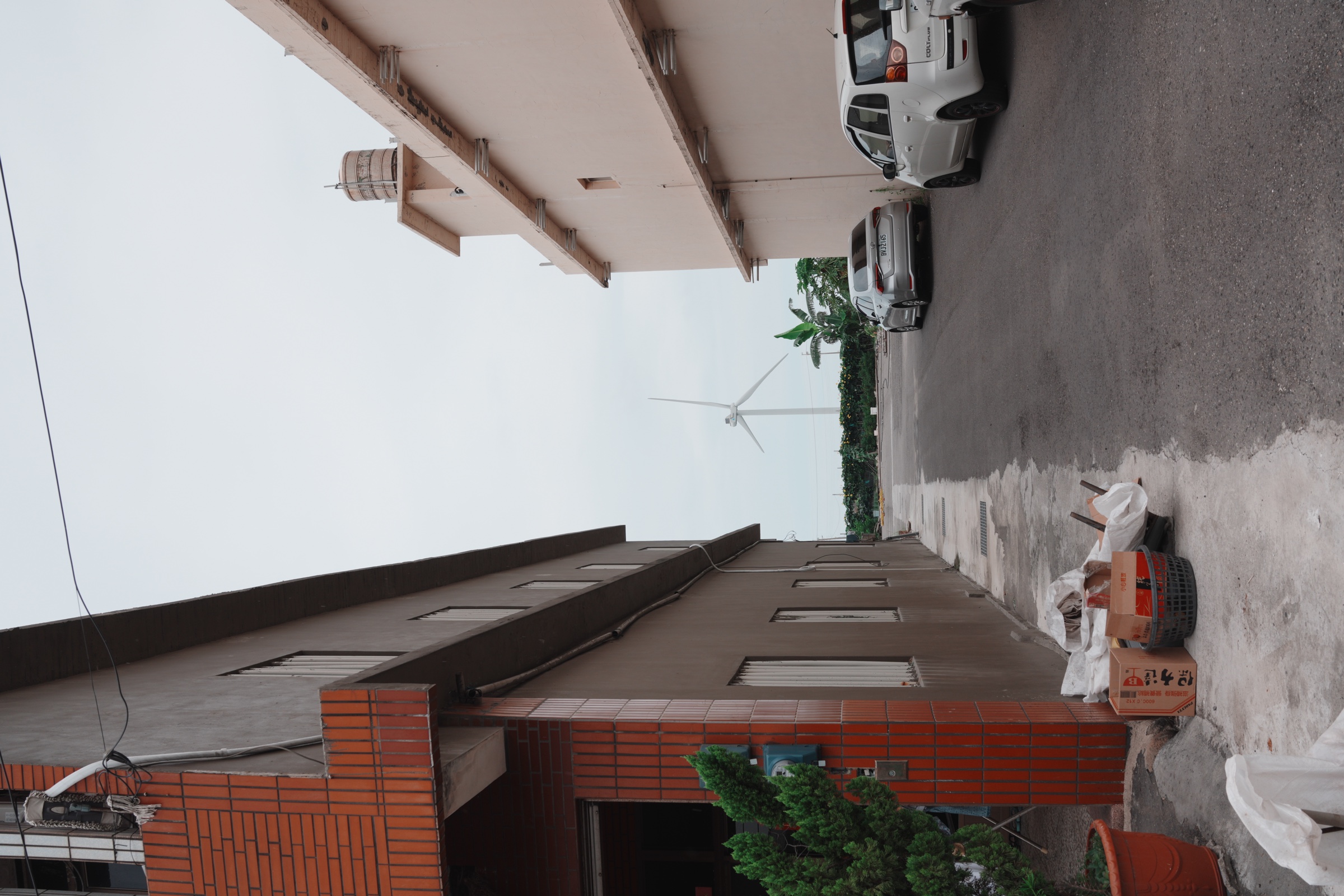
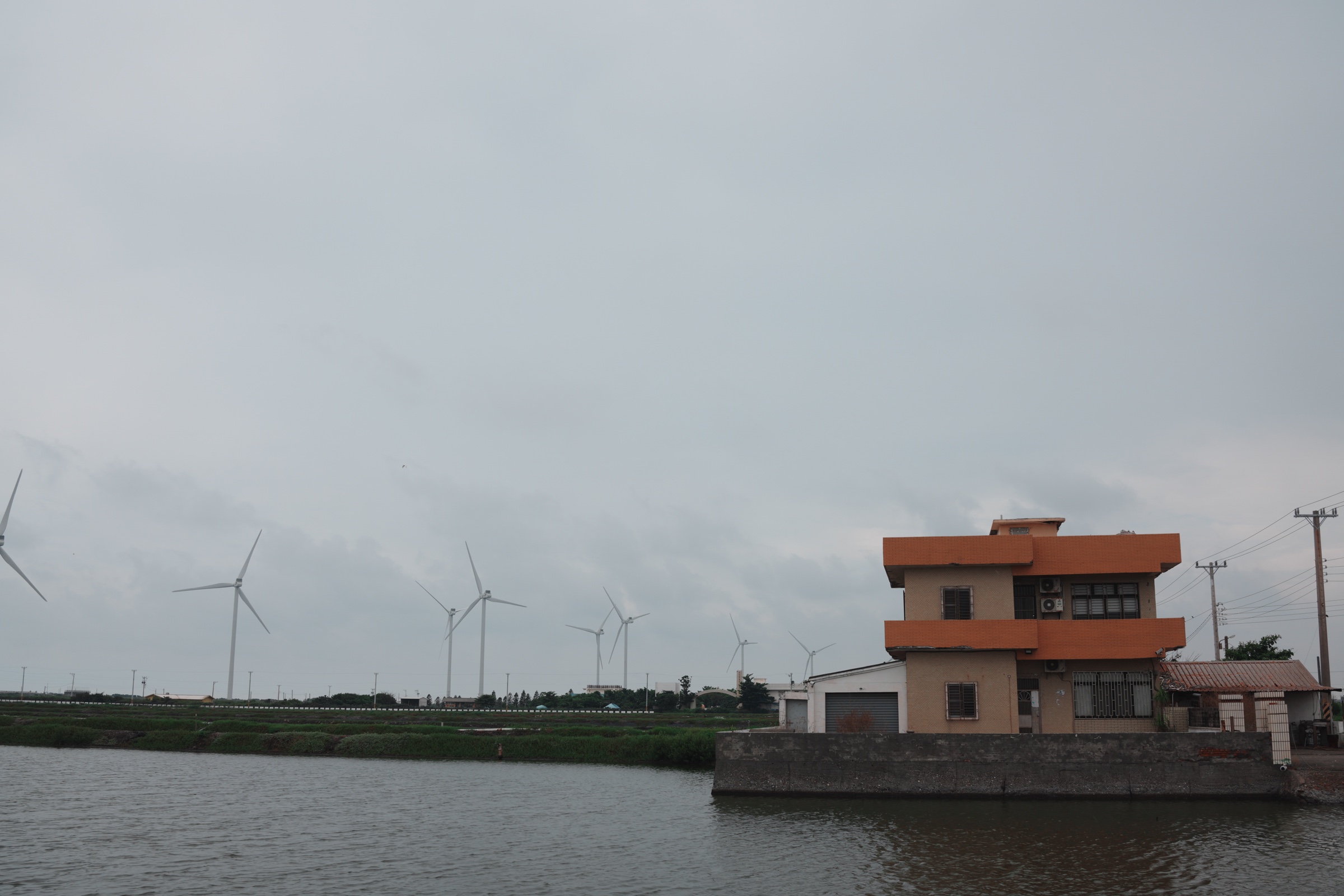
At Hanbao Wetland, a wind-turbine tower rose immediately behind an old concrete house. From a village lane, another rotor occupied the opening between two homes. There were parked cars, utility wires, vegetable plots, and then the slow sweep of a blade. Energy infrastructure was not somewhere beyond local life. It had entered its field of vision.
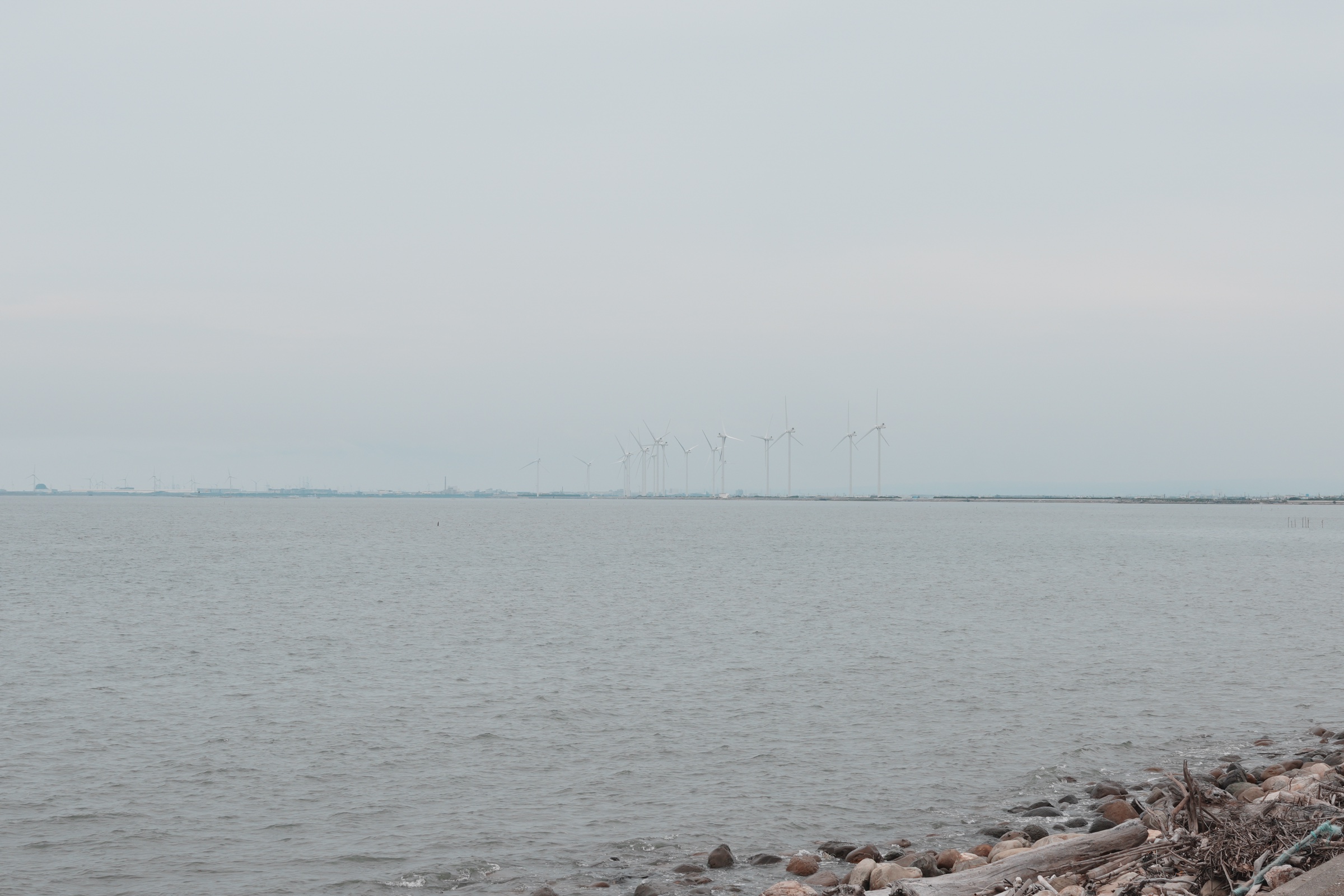
Lukang lies just north of this coast. It is a cultural coordinate for understanding this place. The old saying “yi fu, er Lu, san Mengjia”—first Tainan Prefecture, second Lukang, third Monga—recalls Lukang as one of Qing-era Taiwan's great port towns. In 1982, Lo Ta-yu's Lukang, the Little Town carried its streets, fishing village, temples, migration, and uneasy encounter with modernity into popular music. This coast was therefore narrated long before it was measured as a renewable-energy resource.
This coast is also connected to Taiwan's semiconductor economy. AI systems depend on advanced processors, and TSMC fabricates many of the chips on which that economy rests. Semiconductor manufacturing requires large and reliable supplies of electricity. In July 2020, TSMC signed a twenty-year agreement to purchase all generation from Ørsted's 920 MW Greater Changhua 2b and 4 offshore wind project. The electricity demand of AI hardware, semiconductor production, renewable-power contracts, and wind landscapes are no longer separate stories.
Yet a megawatt is not how infrastructure is lived. Residents encounter a turbine through duration and repetition: a sound that returns, a shadow that crosses a wall, a blade that repeatedly enters peripheral vision, a warning light that punctuates the night. None of these needs to be spectacular to become difficult. Their force lies in recurrence. What can be ignored during a brief visit may become, for someone living there, a demand on attention.
Sound is the first form of proximity. A turning rotor does not produce one clean, continuous tone. Residents may hear a recurring rush or throb—the low, “whoom-whoom” agitation of air—as each blade passes. Wind direction, rotor speed, weather, walls, and the hour of the day change how that sound arrives, but variability does not necessarily offer relief. It can make listening anticipatory: is it quieter now, or is the next pulse about to return? At night, when traffic and work recede, the same sound may occupy more of the acoustic field.
Shadow creates a different rhythm. When the sun, rotor, and dwelling align, the blades interrupt daylight in succession. The effect is not simply a darker patch on the ground; it is an alternation—light, dark, light, dark—moving across a yard, wall, window, or interior. Its timing changes with the season and the sun's angle, yet for the person inside the house it can feel less like a passing image than an infrastructure repeatedly entering domestic space.
Then there is the pressure of having to keep noticing. A resident can close a browser tab, but cannot switch off a turbine at the end of the lane. The blade remains available to peripheral vision; the next sound can be anticipated even during a quiet interval; the possibility of shadow returns with the sun. This does not mean that every nearby resident will suffer in the same way. It means that visibility, recurrence, and the absence of control can turn infrastructure into a continuing claim on attention.
A 2024 CommonWealth Magazine investigation opens nearby, in Fangyuan, with the experience of Li Su-lian. After three land-based turbines were erected near her home, the report describes round-the-clock low-frequency noise and enormous rotating shadows repeatedly entering the small coastal house. Li reported dizziness and insomnia, eventually relying on medication to sleep. Her testimony is not proof that every turbine produces the same symptoms in every person. It is evidence of how an energy project can become intimate: entering the senses, organising anticipation, and following a resident into the night.
Studies elsewhere provide a more differentiated account. A Dutch survey found a dose-response relation between wind-turbine sound levels and annoyance; among residents who could hear the turbines, sleep disturbance and psychological distress were associated with sound through annoyance rather than as direct effects of measured sound level. Health Canada's study of 1,238 residents likewise found increasing annoyance with noise, blinking lights, shadow flicker, visual change, and vibration as calculated sound levels rose. Within its exposure range, however, it found no association between sound level and migraines, dizziness, self-reported or measured sleep, quality of life, or perceived stress.
Sleep evidence remains mixed rather than absent. A Danish nationwide cohort found that higher nighttime outdoor wind-turbine noise was associated with greater redemption of sleep medication among people aged sixty-five and older, while patterns were less consistent in younger groups. In a Swedish laboratory experiment, wind-turbine noise worsened self-rated sleep and produced small changes in REM latency and duration, but not significant changes in sleep efficiency, awakenings, or wakefulness after sleep onset. These studies support taking residents' disturbance seriously without converting every symptom into a universal diagnosis. The geographical question remains: who is required to live with a recurring disturbance, and whose account of a changed home is accepted as evidence?
The CommonWealth investigation identified 63 “green-power townships”—places carrying an unusual concentration of Taiwan's renewable-energy development. Pei-Wen Lu, Yu-Fei Lin, and Sheng-Yu Yang describe a related problem in their study of offshore wind development along the Changhua coast. When planning is organised through national targets, technical expertise, and financial negotiation, a “silent majority” may remain weakly represented even as the meaning and use of its place are transformed.
在汉宝湿地,一座风机从老旧的水泥房背后升起;走进村里的另一条巷道,叶轮又占据了两栋住家之间的开口。停放的车辆、电线、菜地,以及叶片缓慢扫过的轨迹,同时出现在画面里。能源基础设施并不在地方生活之外,它已经进入居民每天的视野。
这片海岸向北不远便是鹿港。鹿港是理解此地的一处文化坐标。“一府二鹿三艋舺”的旧说,记下了鹿港作为清代台湾重要港市的历史位置;1982 年,罗大佑的〈鹿港小镇〉又把街道、渔村、庙宇、离乡,以及地方面对现代化时的不安带进流行音乐。在海岸被计算为再生能源资源之前,它早已被生活、历史与歌曲反复讲述。
这片海岸也并不在 AI 产业之外。AI 运算依赖先进处理器,其中许多芯片由台积电制造,而半导体制造需要庞大且稳定的电力。2020 年 7 月,台积电签下二十年合约,承购沃旭大彰化西南第二阶段及西北离岸风电项目所发的全部电力,签约容量为 920 MW。AI 硬件的用电需求、半导体制造、绿电合约与风电地景,已不再是彼此无关的故事。
然而,人不会以“兆瓦”为单位生活。居民与风机相处,感受到的是时间与重复:再次响起的声音、扫过墙面的阴影、不断进入余光的叶片,以及每晚重新亮起的警示灯。这些现象不必惊天动地,也可能逐渐变得难以忍受。短暂停留者可以忽略的事物,对长期居住在这里的人而言,却会一再牵动注意力。
声音最先让这种距离变得具体。转动的叶轮并不会发出稳定、连续的声响。居民听见的,可能是反复回来的气流声与搏动声——叶片一次次搅动空气,形成低沉的“呼隆、呼隆”。风向、转速、天气、建筑墙面和时段,都会改变声音传进住宅的方式。时有时无未必让人轻松,反而可能使人等待:现在是真的安静了,还是下一阵声音就要回来?到了夜里,车流与生产活动逐渐退去,同样的声响会在听觉中变得更加突出。
阴影带来的是另一种节律。当太阳、叶轮与住宅形成特定角度,叶片会一次次切断日光。那不只是一块落在地上的暗影,而是明、暗、明、暗的交替,扫过院落、墙面和窗户,甚至进入室内。阴影出现的时段会随季节和太阳高度而改变;对屋内的人来说,这未必只是一幅短暂的画面,而是基础设施反复进入居住空间。
更难摆脱的,是不得不持续注意它的压力。风机并不由附近居民控制。叶片随时可能进入余光;即使暂时安静,人也可能等待下一次声响;太阳再次到达相应角度,阴影又会出现。这并不意味着每一位居民都会有同样的反应,但当一种设施长期可见、反复出现而又无法控制,它便可能持续牵扯人的注意力。
《天下杂志》2024 年的调查以芳苑居民李素莲的经历开篇。三座陆域风机在她家附近建成后,报道记录了昼夜不停的低频噪音,以及巨大而旋转的阴影反复进入海边住家。李素莲自述开始头晕、失眠,最后需要依靠药物入睡。她的经历不能证明每一座风机都会给每个人带来同样的症状,却清楚记录了能源设施如何进入感官,并一路影响到夜间睡眠。
其他地区的研究呈现出更复杂的图景。荷兰一项调查发现,风机声级越高,居民感到噪音困扰的比例也越高。对于能够听见风机的居民,声级本身并不能直接预测睡眠干扰和心理压力;居中起作用的,是他们实际感受到的噪音困扰。加拿大卫生部对 1,238 名居民的研究也发现,随着估算声级升高,居民对噪音、闪灯、阴影闪烁、景观变化和振动的高度困扰随之增加;但在该研究涵盖的声级范围内,并未发现声级与偏头痛、头晕、主观或客观睡眠指标、生活质量及自述压力之间存在稳定关联。
关于睡眠,研究结果仍不一致。丹麦一项全国队列研究发现,较高的夜间户外风机噪音,与 65 岁以上人群领取安眠药的概率升高有关;在较年轻人群中,这种关系并不稳定。瑞典一项实验室研究发现,风机噪音会使受试者对睡眠的主观评价变差,也会使快速眼动睡眠的潜伏期和持续时间出现小幅变化;但睡眠效率、夜间觉醒次数及入睡后清醒时间等主要指标并无显著改变。这些研究提醒我们认真对待居民所报告的干扰,却不足以把每一种症状都写成普遍适用的医学结论。地理学仍需追问:谁被要求长期忍受反复出现的干扰?谁对家园变化的叙述,能够被制度承认为证据?
《天下》的调查辨认出 63 个“绿电之乡”,也就是再生能源设施异常集中的地方。卢沛文、林妤霏与杨盛宇对彰化海岸离岸风电的研究指出了相近的问题:当规划主要围绕国家目标、技术知识和金融协商展开时,地方已经发生改变,一群“沉默的大多数”却仍难以进入真正的决策过程。
Endnote尾注
- Ørsted, “Ørsted and TSMC Sign the World's Largest Renewables Corporate Power Purchase Agreement,” 8 July 2020.
- TSMC, “TSMC Expands Renewable Energy Usage to Cut Carbon Emissions by More Than 2 Million Tons,” 8 July 2020.
- TSMC, “Renewable Energy Adoption,” noting long-term power purchase agreements with both offshore and onshore wind farms.
- Taiwan Power Company, Green Electricity Q&A, explaining renewable-electricity wheeling and bundled electricity/T-REC transfers through the grid.
- Taiwan Power Company, “Taipower Offshore Wind Power Phase I Awarded,” 13 February 2018: 21 turbines, 109.2 MW, approximately eight kilometres west of Fangyuan.
- Energy Administration, Ministry of Economic Affairs, 2020 Energy Statistics Handbook: Wanggong Wind Power Station, ten 2.3 MW turbines, 23 MW, commissioned March 2011; Yongxing Wind Power Station, four 2.3 MW turbines, 9.2 MW, commissioned December 2020. Current operating context: Taipower land-wind generation overview.
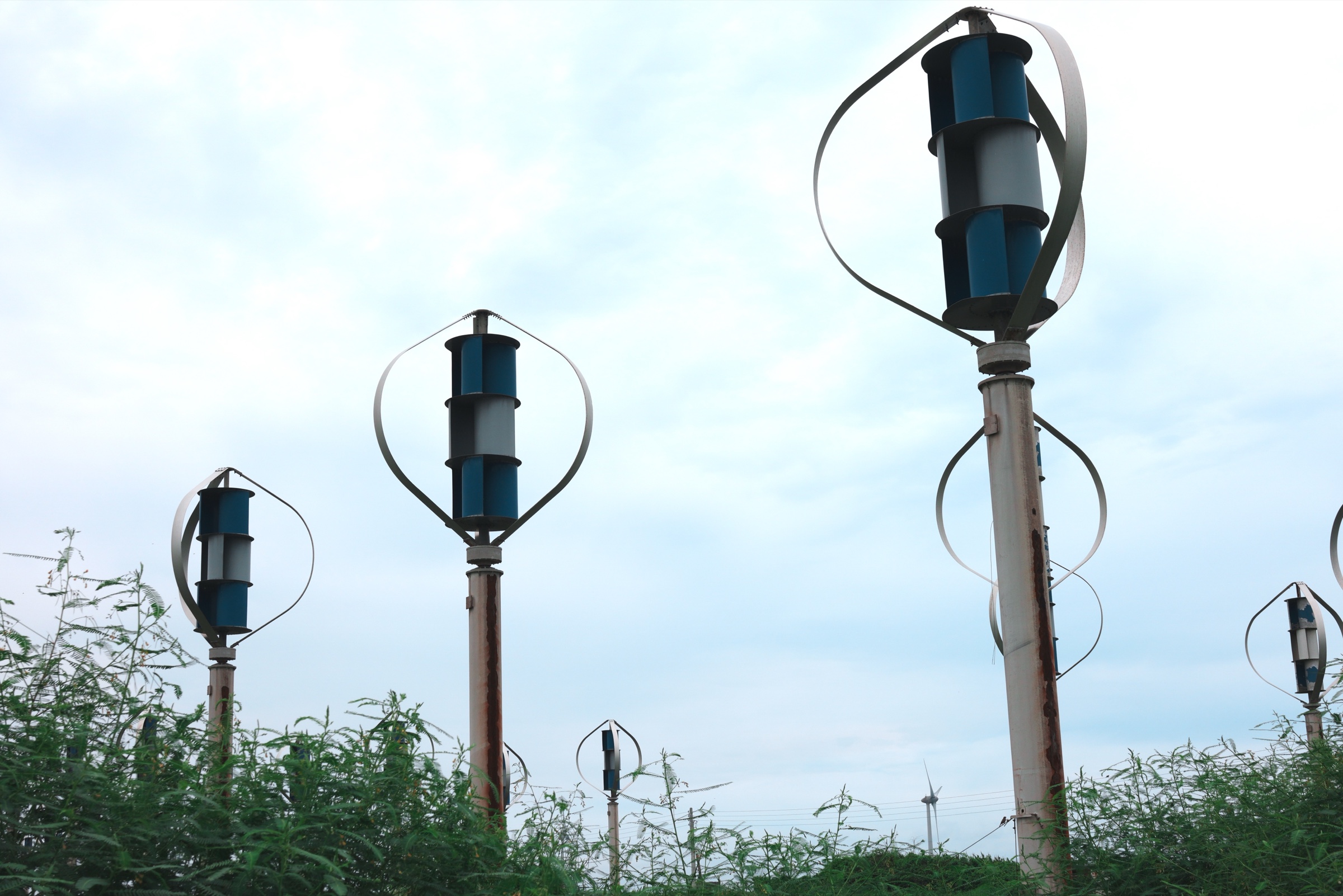
- Environmental Information Center, “Wanggong fishpond turbines stir land-parcel controversy,” 19 June 2018; TVBS, “Science-fiction scene: Wanggong small wind turbines draw photographers,” 13 June 2018. The reports describe approximately 432–450 vertical-axis turbines, 3 kW each, and state that the project had not obtained permission to connect to the grid at the time.
- Green-power disaster households: the suffering comes into view, CommonWealth Magazine, 25 March 2024 (updated 28 March 2024).
- Pei-Wen Lu, Yu-Fei Lin, and Sheng-Yu Yang, “Local Responses to Offshore Wind Power Development in the Changhua Coastal Region: A ‘Place’ Perspective in Human Geography,” City and Planning 52(2), 2025, pp. 265–288.
- World Health Organization Regional Office for Europe, Environmental Noise Guidelines for the European Region, 2019.
- “The Influence of Wind Turbine Visibility on the Health of Local Residents: A Systematic Review,” International Archives of Occupational and Environmental Health, 2019.
- R. H. Bakker et al., “Impact of Wind Turbine Sound on Annoyance, Self-Reported Sleep Disturbance and Psychological Distress,” Science of the Total Environment 425, 2012, pp. 42–51.
- D. S. Michaud et al., “Exposure to Wind Turbine Noise: Perceptual Responses and Reported Health Effects,” Journal of the Acoustical Society of America 139(3), 2016, pp. 1443–1454; S. A. Voicescu et al., “Estimating Annoyance to Calculated Wind Turbine Shadow Flicker,” pp. 1480–1492.
- A. H. Poulsen et al., “Impact of Long-Term Exposure to Wind Turbine Noise on Redemption of Sleep Medication and Antidepressants,” Environmental Health Perspectives 127(3), 2019; M. G. Smith et al., “A Laboratory Study on the Effects of Wind Turbine Noise on Sleep,” Sleep 43(12), 2020.
- Lukang's historical and cultural context: Lukang Township Office, “About Lukang”; Taiwan Cinema, Lo Ta-yu profile; Lukang, the Little Town, on the 1982 album Zhi Hu Zhe Ye.
- Map sources: Tourism Administration open data for Hanbao Wetland; Changhua County, Fubao Wetland; Changhua coastal-wetland wildlife and habitat monitoring report; OpenStreetMap contributors, including Hanbao Village relation 9751498, Fubao Village relation 9467405, five
natural=mudpolygons, 34 land turbines, and 21offshore=yesturbines, retrieved through Nominatim and Overpass API on 31 July 2026. Shallow-sea aquaculture zones are digitised from the coordinate table in the Ministry of Agriculture's 2025 Changhua District Fishermen's Association exclusive fishing-right notice. The map is an orientation figure, not a legal wetland, oyster-plot, exposure-zone, or complete turbine inventory.
- 沃旭能源,〈沃旭能源和台积电签署全球最大的企业再生能源购售电契约〉,2020 年 7 月 8 日。
- 台积电,〈TSMC Expands Renewable Energy Usage to Cut Carbon Emissions by More Than 2 Million Tons〉,2020 年 7 月 8 日。
- 台积电,〈扩大再生能源使用〉,说明长期电力采购合约同时包括离岸与陆域风电。
- 台湾电力公司,〈绿电自由转供常见问答〉,说明再生能源经电网转供及电力与 T-REC 凭证合一移转。
- 台湾电力公司,〈台电离岸风电第一期计划决标〉,2018 年 2 月 13 日:21 座风机、109.2 MW,位于芳苑以西约八公里。
- 经济部能源署,《2020 能源统计手册》:王功风力发电站 10 座单机 2.3 MW 风机,合计 23 MW,2011 年 3 月商转;永兴风力发电站 4 座单机 2.3 MW 风机,合计 9.2 MW,2020 年 12 月商转。当前运转情况另见台电陆域风电发电全览。
- 环境资讯中心〈王功鱼塭风机 地号切割惹议〉,2018 年 6 月 19 日;TVBS〈科幻风!王功小型风力发电机 民众抢拍〉,2018 年 6 月 13 日。两篇报道记载约 432—450 座垂直轴小型风机、单机 3 kW,并指出该项目当时尚未取得并网许可。
- 《天下杂志》,〈绿电受灾户:苦难现形记〉,2024 年 3 月 25 日发布,3 月 28 日更新。
- 卢沛文、林妤霏、杨盛宇,〈彰化海域离岸风电发展与在地回应:人文地理学“地方”视角〉,《都市与计划》52(2),2025,页 265–288。
- 世界卫生组织欧洲区域办事处,Environmental Noise Guidelines for the European Region,2019。
- 〈The Influence of Wind Turbine Visibility on the Health of Local Residents: A Systematic Review〉,International Archives of Occupational and Environmental Health,2019。
- R. H. Bakker 等,〈Impact of Wind Turbine Sound on Annoyance, Self-Reported Sleep Disturbance and Psychological Distress〉,Science of the Total Environment 425,2012,页 42–51。
- D. S. Michaud 等,〈Exposure to Wind Turbine Noise: Perceptual Responses and Reported Health Effects〉,Journal of the Acoustical Society of America 139(3),2016,页 1443–1454;S. A. Voicescu 等,〈Estimating Annoyance to Calculated Wind Turbine Shadow Flicker〉,页 1480–1492。
- A. H. Poulsen 等,〈Impact of Long-Term Exposure to Wind Turbine Noise on Redemption of Sleep Medication and Antidepressants〉,Environmental Health Perspectives 127(3),2019;M. G. Smith 等,〈A Laboratory Study on the Effects of Wind Turbine Noise on Sleep〉,Sleep 43(12),2020。
- 鹿港历史与文化背景:鹿港镇公所〈About Lukang〉;台湾电影网,罗大佑人物资料;罗大佑〈鹿港小镇〉,收录于 1982 年专辑《之乎者也》。
- 地图资料:交通部观光署汉宝湿地开放资料;彰化县福宝湿地资料;彰化海岸湿地野生鸟类与栖地监测报告;OpenStreetMap 贡献者,包括汉宝村 relation 9751498、福宝村 relation 9467405、5 个
natural=mud面、34 座陆域风机及 21 座标记为offshore=yes的离岸风机,经 Nominatim 与 Overpass API 检索于 2026 年 7 月 31 日。浅海养殖水域依农业部 2025 年彰化区渔会专用渔业权公告所附坐标表数化。本图用于辨认地方,并非法定湿地、逐块蚵田、暴露范围或完整风机清册。